

Polar Ice Sheets
1978 CE - 2026 CE • Antarctica, Greenland
VIDEO COMING SOON
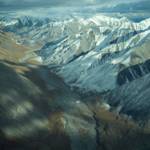
There are two continental-scale ice sheets on Earth, Greenland and Antarctica, covering an area the size of the US and Mexico combined. Since 1978, North Greenland’s ice shelves have undergone a rapid disintegration and weakening, losing more than 35% of their total volume. Antarctica’s ice is now undergoing a similar process. Its most threatened glacier, the Thwaites, has been dubbed the “Doomsday Glacier” for its potential to unleash a domino effect of collapse across the West Antarctic ice sheet in the 21st and 22nd centuries reshaping the coastline of the planet. But rising seas are not the only threat. Freshwater melt from Polar ice sheets could upend ocean currents that regulate the climate resulting in a chaotic disruption of global weather, increasing the severity of storms and frequency of droughts and impacting the reliability of global agricultural output. Reducing greenhouse gas emissions is the only way to limit the cascading consequences of melting polar ice.
- ICCI, Columbia Climate School, ITGC, Carbon Brief
WHAT YOU CAN DO
Reduce your carbon footprint — cutting emissions is the most direct way to slow the melting of polar ice sheets.
Support research monitoring Antarctica’s Thwaites Glacier and the stability of the West Antarctic Ice Sheet.
Support climate adaptation for coastal communities facing sea-level rise.
MORE INFORMATION AND HOW TO HELP
International Thwaites Glacier Collaboration (Sept 2025) “Antarctica’s Thwaites Glacier and sea-level rise Results from the International Thwaites Glacier Collaboration.
ICCI
Columbia Climate School
Carbon Brief
Audio and Video Pond5



Learn about Maya Lin’s fifth and final memorial: a multi-platform science based artwork that presents an ecological history of our world - past, present, and future.
Discover ecological histories and stories of former abundance, loss, and recovery on the map of memory.
Learn how we can reduce our emissions and protect and restore species and habitats – around the world.

See how art can help us rethink the problems we face, and give us hope that each one of us can make a difference.

Help make a global memorial something personal and close to home. Share your stories of the natural world.